
As students increasingly seek clear connections between higher education and career opportunity, colleges and universities are under growing pressure to demonstrate the value of a degree beyond the classroom. At the Universidad Autónoma de Baja California (UABC) in Baja California, Mexico, leaders responded by creating a workforce partnership approach that connects students with employers throughout their academic journey, helping them gain professional experience, build workplace skills, and strengthen their pathways to employment after graduation.
For generations, Mexican public universities have required students to complete servicio social—a form of service learning and community engagement—before earning a degree. While that tradition remains an important part of the student experience, UABC recognized an opportunity to build stronger connections between academic learning and professional practice.
Through its Coordinación General de Vinculación y Cooperación Académica (CGVCA), the university has developed a range of workforce partnerships that integrate experiential learning, industry engagement, and academic coursework. These efforts are designed to strengthen workforce readiness, improve employment outcomes, and increase students’ confidence in the long-term value of higher education.
UABC’s sector-engaged learning experiences can be viewed as a progression of three increasingly immersive approaches:
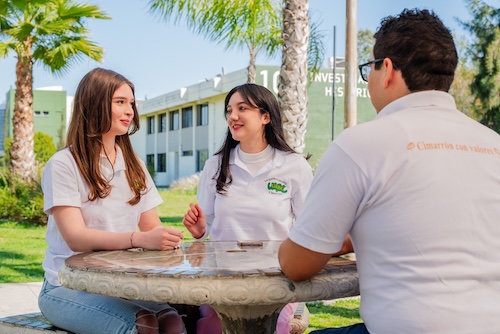
- Level One: Professional Internships
Beginning around the fifth semester, most undergraduate students complete short-term professional internships connected to their field of study. - Level Two: Proyectos de Vinculación con Valor en Créditos (PVVC)
Through this UABC modality, students participate in semester-long partnership projects for academic credit, collaborating with companies and organizations to solve real-world challenges related to their disciplines. - Level Three: Project-Based Professional Training
Introduced under the administration of President Luis Enrique Palafox Maestre, this final-year experience embeds students within a company or organization for their final academic year. Students are supervised by both faculty members and industry mentors, receive stipends, and often transition directly into employment after graduation.
The university developed these approaches to address several goals, including strengthening professional skills development, providing earlier exposure to workplace environments, increasing employer engagement with the university, and creating stronger pathways to economic mobility for students.
Methodology
While internships and applied projects are visible components of these efforts, university leaders attribute much of their success to the infrastructure supporting those experiences.
Every academic department at UABC has a designated faculty industry liaison who serves as a bridge between academic programs and employers. These faculty members understand both the curriculum and the professional landscape students will enter after graduation. Together, they form a university-wide network responsible for cultivating employer relationships and identifying opportunities for student engagement.

Supporting this work are satellite offices of the Coordinación General de Vinculación y Cooperación Académica (CGVCA) located across UABC’s campuses in Tijuana, Mexicali, and Ensenada. These offices provide operational support to students, faculty, and employers while helping coordinate placements, projects, and partnerships.
Rather than managing employer engagement through a single centralized office, UABC distributes responsibility across multiple levels of the institution. Strategic leadership is provided centrally, while implementation occurs through campus offices, faculty liaisons, and academic departments.
These approaches evolved through collaboration among university leaders, faculty members, students, and industry partners. Because academic freedom is highly valued at UABC, participation in newer learning modalities could not simply be mandated. Instead, university leaders identified faculty champions willing to pilot innovative approaches and demonstrate their effectiveness through measurable results.
According to Martha Lobo, vice president and general coordinator of the Coordinación General de Vinculación y Cooperación Académica (CGVCA), building trust, cultivating relationships, and creating shared ownership across the institution were essential to successful implementation.
Impact
The strongest evidence of the effectiveness of these efforts comes from the level three project-based professional training initiative.

Active for approximately two and a half years, the program has produced promising employment outcomes. According to university leaders, approximately 90% of students who complete the final-year placement remain employed with the organization where they completed their training experience.
Students also report substantial growth in communication, teamwork, leadership, responsibility, and workplace confidence. By engaging with employers before graduation, participants gain practical experience while developing professional networks that can support future career advancement.
These efforts have strengthened relationships between the university and employers as well. Industry partners gain access to emerging talent, while faculty members gain greater insight into workforce trends and employer expectations. These relationships help ensure that academic programs remain responsive to evolving workforce needs.
Institutional leaders believe the initiative also helps address a broader challenge facing higher education: demonstrating that a university education can lead to meaningful employment opportunities and long-term economic mobility.
Key Takeaways
UABC leaders emphasize that workforce-connected learning is most effective when it is intentionally integrated throughout a student’s academic experience rather than offered as a standalone opportunity.
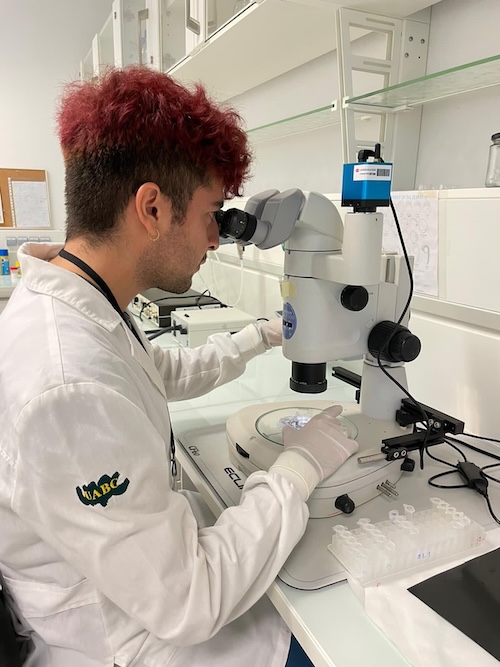
Several lessons have emerged from the university’s work:
- Embed experiential learning within academic programs rather than treating it as an extracurricular activity
- Identify faculty champions who can help pilot new approaches and build institutional support
- Create structures that combine centralized leadership with decentralized implementation
- Develop partnerships that provide value to both students and employers
- Support the development of professional skills such as communication, teamwork, leadership, and workplace confidence alongside technical competencies
- Start with pilot programs, demonstrate results, and scale gradually
- Collect and share outcome data to demonstrate impact and build confidence in the value of higher education
As universities respond to changing workforce demands, advances in technology, and evolving student expectations, UABC’s approach demonstrates how intentional partnerships between higher education and industry can strengthen student success while supporting regional workforce development.